Session “LIBS: From Physical Principles to Multiscale Mapping”
Publié le
In April, the “LIBS: From Physical Principles to Multiscale Mapping” session was held on the La Doua campus in Villeurbanne as part of the PEPR DIADEM continuing education program.
Once again, this session was designed to be specialized, offering both theoretical and practical content that allowed participants, regardless of their skill level, to gain a comprehensive understanding of LIBS, along with an AI-based approach to processing the collected data.
A fascinating and rapidly evolving technique, LIBS brings together an international community of specialists to address major challenges related to materials characterization. Its applications now extend far beyond Earth-based laboratories, all the way to the Mars rover Perseverance.
These scientific and technological advancements are fully realized through ambitious research projects such as LIBELUL: LIBS for high-throughput elemental analysis.
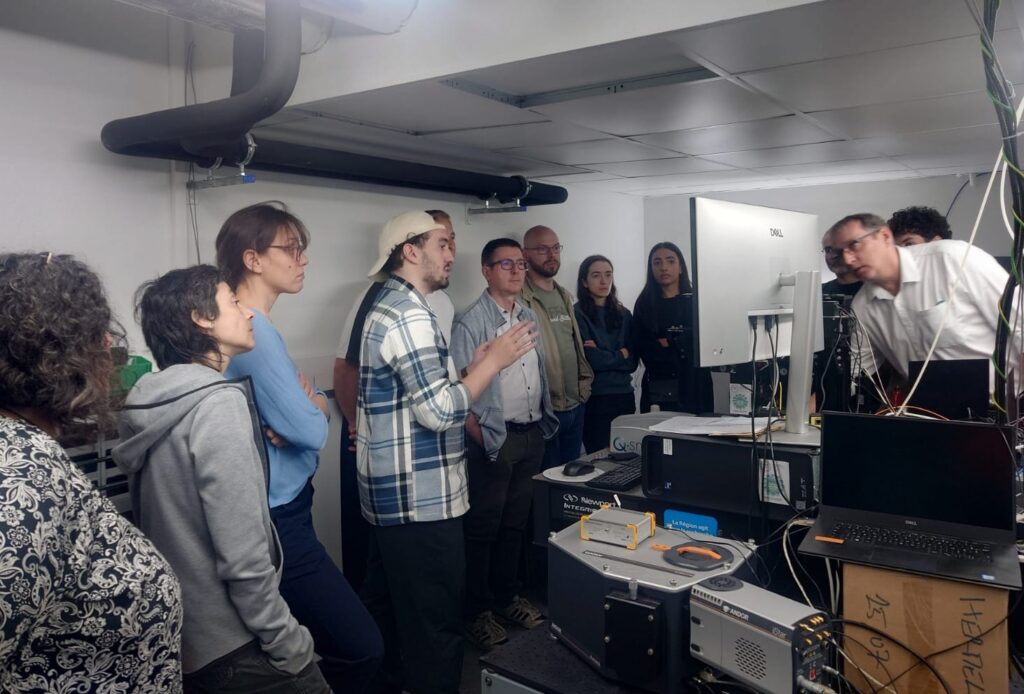
Tour of the LIBELUL platform
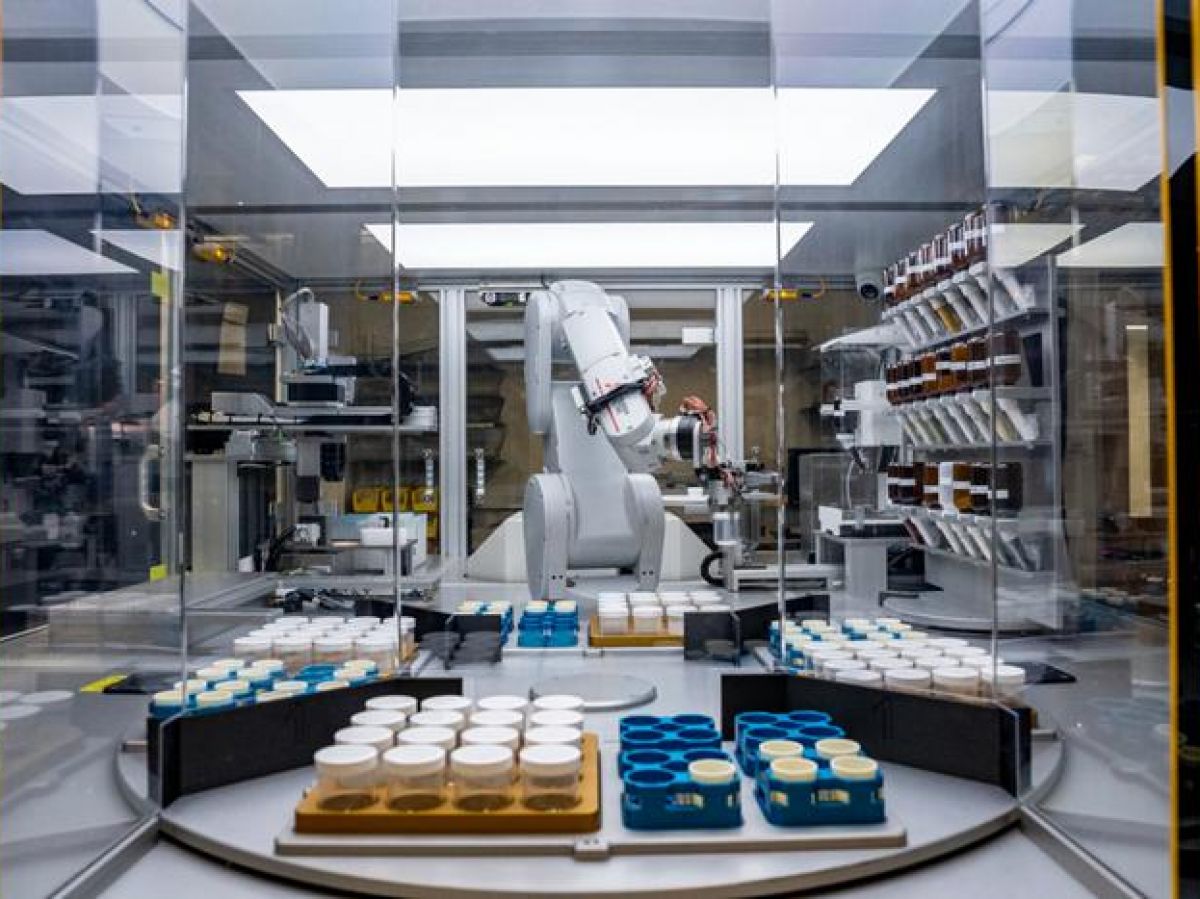
The tour of the platform developed as part of the LIBELUL project provided a concrete demonstration of the potential of the high-throughput characterization approaches supported by the PEPR DIADEM. By combining LIBS, Raman spectroscopy, photoluminescence, and artificial intelligence tools, this platform paves the way for ever faster, more precise, and automated analysis of innovative materials.
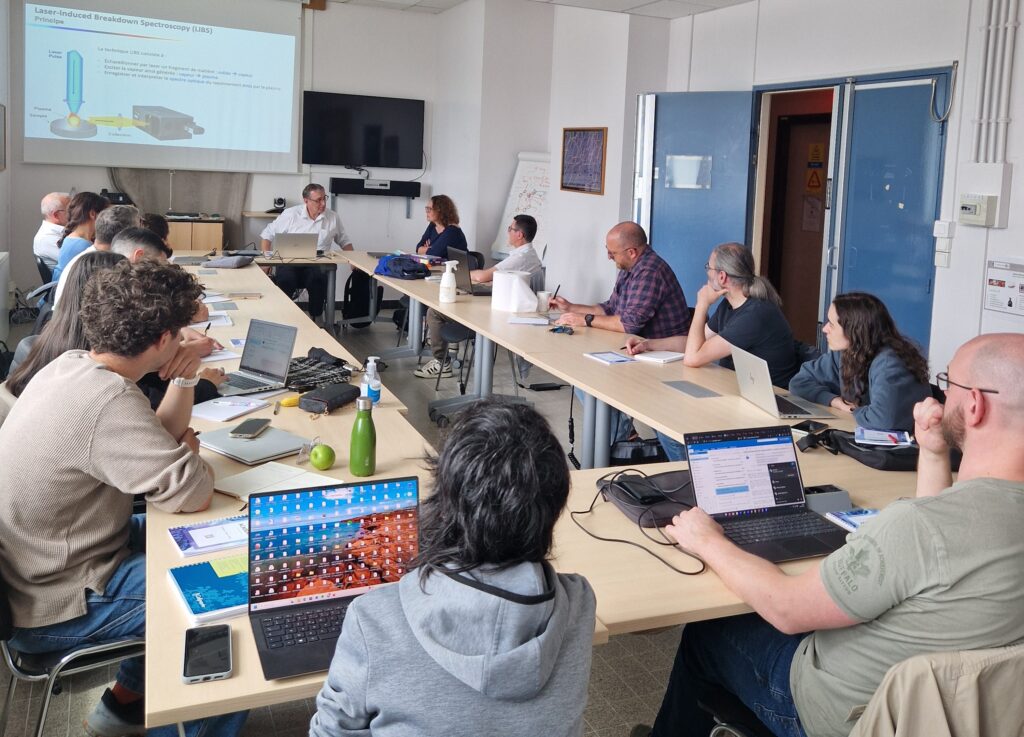
The tour of the facility gave participants a hands-on introduction to the instruments, before they delved into the theory behind LIBS and applied that knowledge directly to the equipment.
Focus on Training
Like previous sessions, this new session brought together a diverse group of participants: doctoral students, postdoctoral researchers, engineers, and faculty members from all over France.
The training also highlighted the strong sense of community: many participants had already used the lab’s LIBS platform to characterize their samples and were already familiar with the instructors, all of whom are recognized experts in the field.
The hands-on sessions gave participants a better understanding of the complexity of LIBS technology and the experimental conditions required to obtain optimal results. These sessions were co-led by four young members of the local team, whose active involvement greatly contributed to the quality of the discussions and the personalized support provided to the participants.
The presentation of the in-house software allowed them to explore ways to optimize the processing time and interpretation of the data generated.
A rewarding experience with exceptional, passionate experts
This training session, led by Vincent Motto-Ros, Bruno Bousquet, and Cécile Fabre – three specialists with complementary areas of expertise – was particularly well-received. Their kindness, dedication, and teaching skills left a lasting impression on the participants, who unanimously praised their commitment and willingness to help. Clear explanations and friendly, stimulating group discussions also contributed to its success.
Thank you to all the participants and the local teams
First of all, a big thank you to Vincent Motto-Ros, whose exceptional dedication was instrumental: without his commitment and expertise, this training program simply would not have been possible.
We would also like to thank his colleagues Cécile Fabre and Bruno Bousquet, members of the LIBS Club of the French Optical Society, who made a special trip to contribute to this session.
We would also like to thank the Institut Lumière Matière for hosting us at its facilities in Villeurbanne.
Not to mention our four young people, whose involvement in leading the hands-on activities greatly enriched this training program:
Samy Guellour, a second-year doctoral student at the GeoRessources laboratory (supervised by Cécile Fabre) and based at the ILM (co-supervised by Vincent Motto-Ros), whose thesis focuses on the detection of lithium-bearing pegmatites in the Beauvoir Granite (Massif Central) and the development of a kHz LIBS system for real-time analysis of mineral phases (ANN).
César Alvarez Llamas, Temporary Teaching and Research Associate, is working on finalizing the LIBELUL platform and processing data for multimodal imaging.
Emilien Prungnaud, a research engineer at the ILM, is responsible for the geological and geochemical characterization of Rwandan soils associated with podoconiosis, as well as for LIBS measurements and the interpretation of results from geological samples.
Nicolas HERREYRE, a doctoral student nearing completion of his thesis in archaeometry, specializing in the application of LIBS imaging to archaeological mortars and ceramics, as well as in the development of radiocarbon dating of lime mortars using laser ablation.
To stay up to date on our news and upcoming events, sign up for our newsletter!
Plus d'actualités