A look back at the PaNRAID training session: Photons and Neutrons Realistic Artificial Intelligence Datasets
Publié le
The start of the school year marked the launch of a new continuing education session at the DIADEM Academy. We were delighted to gather in Saint-Pierre-d’Oléron for the PaNRAID training course: Photons and Neutrons Realistic Artificial Intelligence Datasets.
This week was particularly rich in discussion, with participants and instructors from various countries who work at several renowned scientific institutions around the world. This diversity of backgrounds and cultures created a wonderful dynamic within the group, while bringing together participants who share a common interest in neutron and X-ray techniques.
Beyond the scientific content, the setting of the La Vieille Perrotine site (CAES of the CNRS) played a major role in fostering a friendly group atmosphere. The particularly favorable weather allowed participants to explore Île d’Oléron by bike and, for the bravest among them, even go for a swim!
A boat trip around Fort Boyard, organized on Thursday, rounded out this week of work and exchanges, providing another opportunity for the participants to spend time together.
In short, it was a busy week full of learning opportunities, but also of new encounters, in a setting that was particularly conducive to exchanges among participants from different geographic and cultural backgrounds.
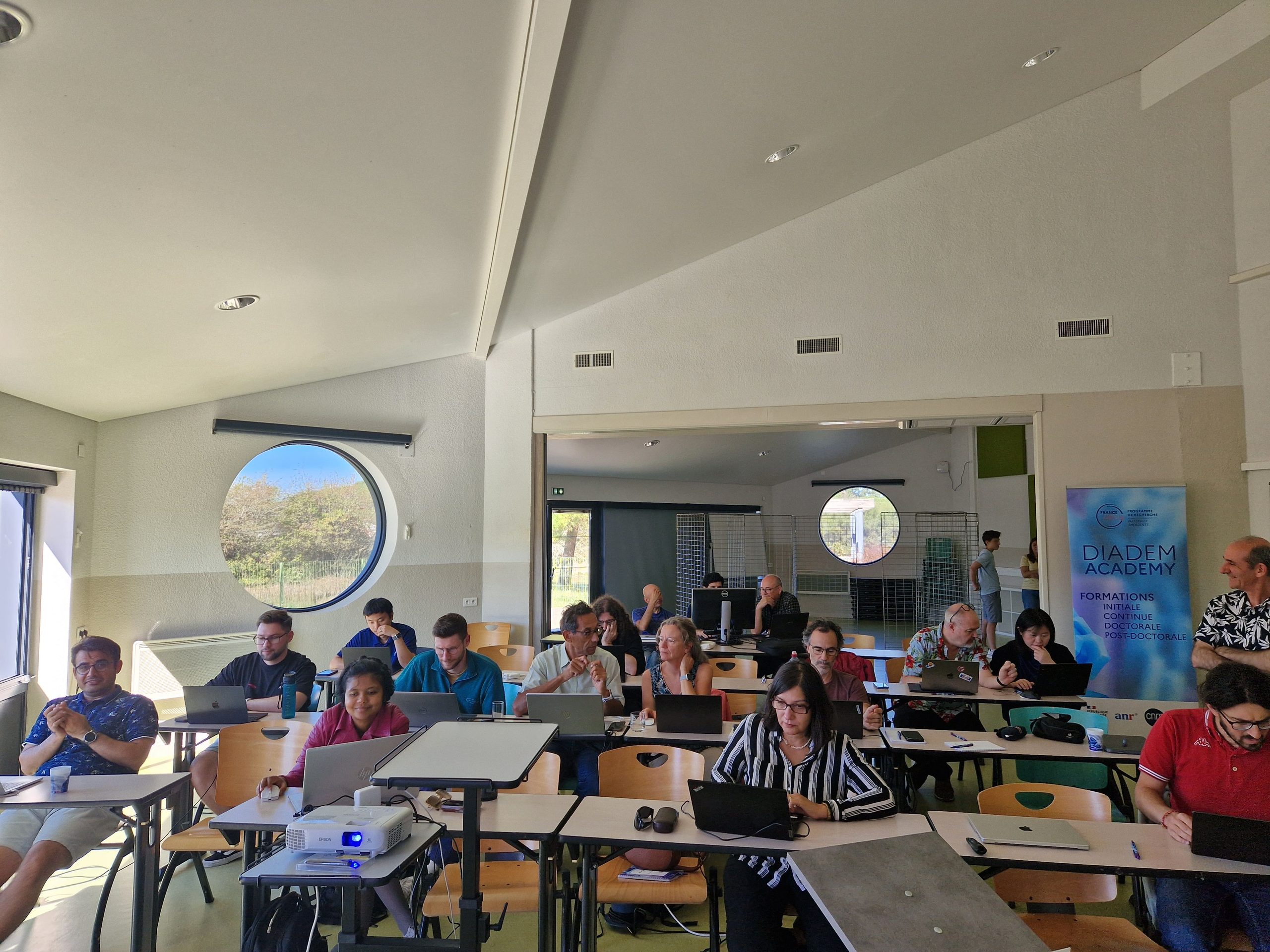
Focus on the training
Throughout the week, participants learned how to build and customize realistic digital twins of scientific instruments using the McStas and McXtrace software, based on actual equipment such as FOCUS, EQ-SANS, and DMC. These models make it possible to virtually reproduce the entire operation of an experiment, taking into account the various components of the instrument: sources, optics, samples, and detectors.
These digital twins were then transformed into veritable “data factories,” capable of automatically generating large amounts of synthetic data.
The second part of the training focused on artificial intelligence, including the training and comparison of various machine learning models, ranging from traditional methods to neural networks. Participants also explored different approaches to improving the reliability and performance of their models.
These tools were then applied to real-world scientific problems, such as separating coherent and incoherent contributions in scattering data or determining sample parameters in SANS.
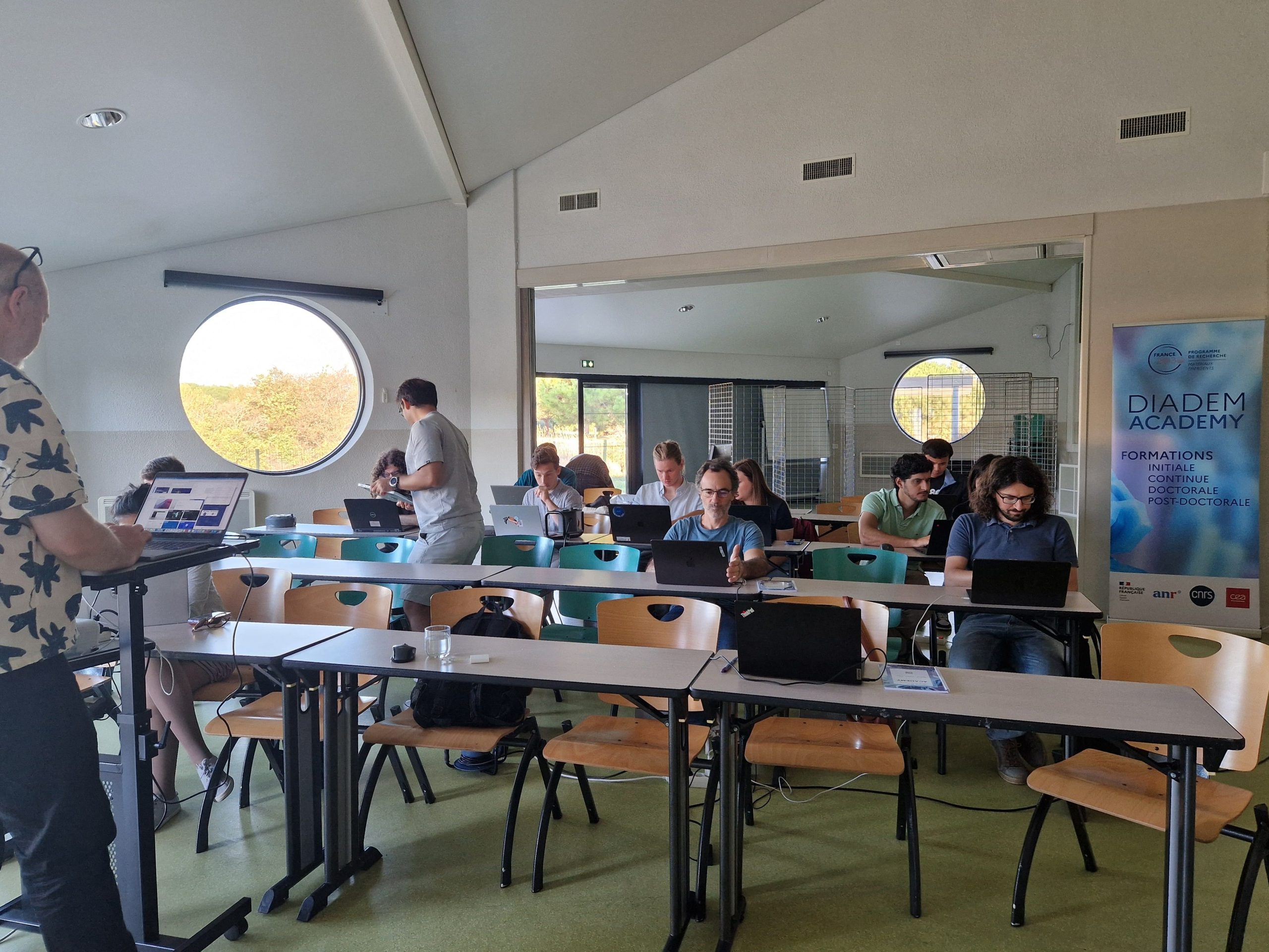
A significant emphasis was placed on hands-on practice and teamwork. Throughout the week, participants worked on real-world projects, following the entire process, from numerical simulation to data generation, then to training an AI model and analyzing the results.
Exercises, workbooks, and challenges allowed them to directly apply the concepts they learned, with guidance from the instructors. This interactive format, combining theory and practice, enabled participants with diverse backgrounds and levels of experience to progress together and successfully complete their projects.
International Experts Gather to Discuss Knowledge Transfer
The training was led by three experts with complementary skills: Emmanuel Farhi, director of the “Data Reduction and Analysis” group at the SOLEIL synchrotron and a contributor to the McStas and McXtrace projects; Peter Willendrup, a senior research engineer at DTU and a key figure in the development of McStas and McXtrace; and José Robledo, a researcher at CONICET and professor at the Balseiro Institute in Argentina, a specialist in machine learning applied to scientific data.
Prior to the training, the instructors did a great deal of preparatory work to tailor the content and exercises to the participants’ needs. Throughout the week, they also guided the learners during the hands-on activities, taking into account their wide range of skill levels and experiences. The small group size fostered discussion and allowed for support that was closely tailored to each person’s needs.
The instructors’ availability and support were particularly appreciated by the participants, who highlighted the quality of the materials provided, the balance between theory and practice, and the assistance offered during the exercises. This is a fine illustration of the importance placed, beyond the scientific content, on knowledge transfer and support for learners.
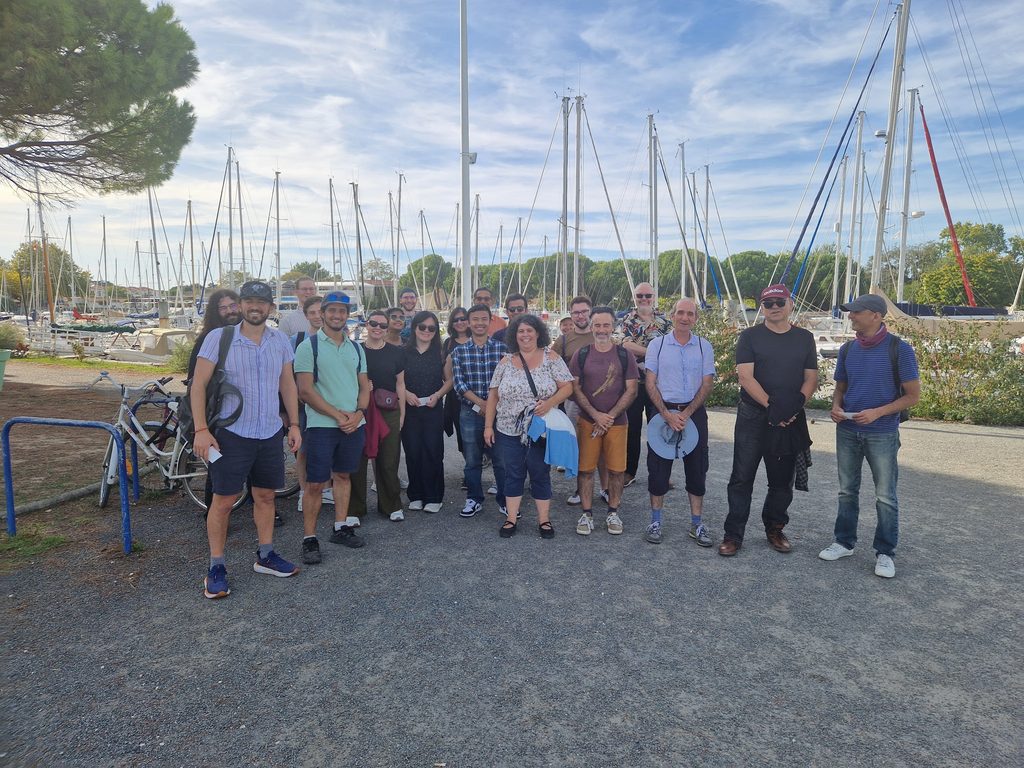
Thank you, everyone!
A big thank you to Emmanuel Farhi, Peter Willendrup, and José Robledo for their dedication, their availability, and the quality of the content they shared throughout the week.
Thank you also to all the participants for their engagement, their curiosity, and the richness of our discussions, which played a major role in making this training a truly enriching experience.
Finally, a big thank you to the teams at the CNRS center in La Vieille Perrotine for their hospitality and support, and especially to Ms. Nell Redert, who was always quick to respond to all our needs, including last-minute ones!
Plus d'actualités